
How Babysitting is Filling Childcare Gaps in Canada
Find a babysitter or babysitting job, or stay up to date with the latest childcare tips!
Get started today for free.
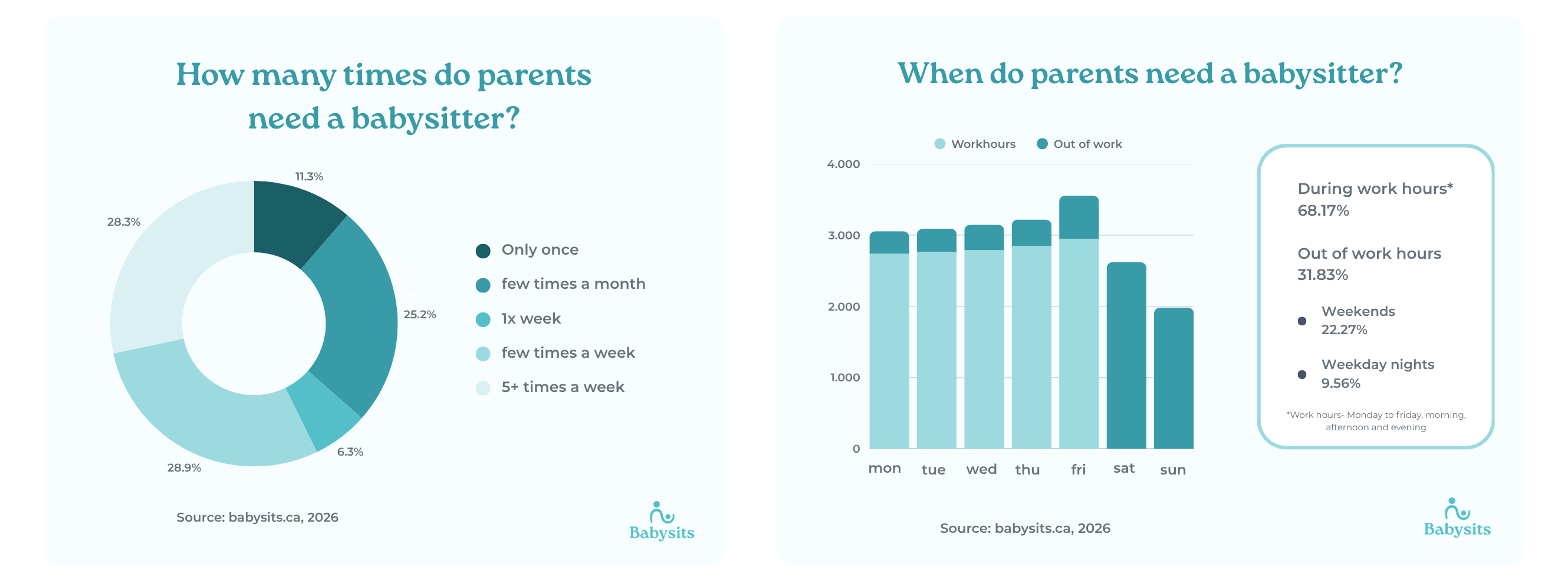
Get startedMore than 6 in 10 families in Canada need a babysitter at least once per week, with a large share of childcare requests taking place during work hours. This highlights how many Canadian parents rely on babysitting not just for the occasional night out, but as part of how they manage their childcare needs alongside work.
Childcare Challenges in Canada
Subsidised childcare doesn’t always match real family needs
Canada has made significant progress in improving childcare affordability through subsidised programs, particularly with the introduction of $10-a-day childcare in some provinces. However, these programs do not always align with how families live and work. Availability varies widely by region, and many childcare centres operate within standard daytime hours, leaving gaps for parents who need care outside of typical schedules.
Long waitlists and limited availability
Even when childcare is more affordable, accessing a spot remains a major challenge. In many parts of Canada, parents face long waitlists for daycare, sometimes waiting months or even years for a place. This limited availability makes it difficult for families to secure consistent childcare, especially for younger children.
Gaps in coverage throughout the day
While formal childcare covers part of the day, it often does not fully align with working hours. Early mornings, late afternoons, and school holidays are not always covered, requiring parents to find additional childcare solutions. As a result, many families rely on flexible options like babysitting to fill these gaps and manage their daily schedules.
Childcare statistics: How babysitting has become part of working family life
Based on Babysits data for Canada:
63.5% of families need a babysitter at least once per week
57.2% need a babysitter more than once per week
68.17% of childcare requests take place during regular working hours
These patterns show that babysitting in Canada is not occasional, but a regular part of how families manage childcare. With more than 6 in 10 families relying on babysitters weekly, childcare needs are both frequent and ongoing. At the same time, a large share of childcare demand takes place during regular working hours, highlighting how babysitting is often used to support parents’ work schedules rather than just evenings or occasional needs.
In Canada, where childcare availability is shaped by waitlists, regional differences, and partial coverage throughout the day, these patterns reflect how families are turning to flexible solutions to bridge the gaps. Babysitting is not just a complement to childcare, but an important way for many families to balance work and family life. This raises a broader question: is this unique to Canada, or part of a wider trend?
A Worldwide Perspective on Childcare During Work Hours
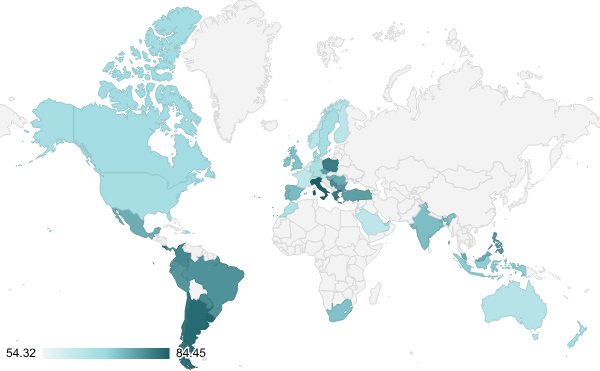
With 68.17% of childcare requests taking place during work hours, Canada sits above the average among countries where Babysits is active. While many countries cluster between 55% and 65%, Canada’s share is slightly higher, placing it closer to higher-demand countries, though still below the highest levels seen in countries such as Italy, Chile, and Greece, where this share can exceed 80%.
This highlights how strongly childcare needs in Canada are linked to parents’ working schedules. Compared to countries such as the Netherlands and Belgium, where demand is more evenly distributed across the week, Canadian families rely more heavily on childcare during standard working hours. At the same time, this pattern is not unique to Canada. Across countries, childcare demand is increasingly shaped by modern working patterns, showing that while Canada sits above average, the underlying challenge—aligning childcare with work—is part of a wider global trend.
How families and employers are adapting to childcare gaps
“Babysitting is no longer an occasional solution for families. Parents are using babysitters and nannies to manage work schedules and fill gaps where traditional childcare falls short” – Peter, CEO of Babysits and parent of three.
Companies are also beginning to recognise this shift. Some employers are introducing broader or more flexible employee childcare benefits to help employees access extended childcare, including babysitting, when they need it.
“We’re seeing more and more companies show interest in our childcare employee benefits program, Babysits for Work.” – Peter, CEO of Babysits
As work continues to evolve, flexible childcare options such as babysitting are becoming an essential part of how families manage their childcare needs in the years ahead.